
When Brett Favre shared his Parkinson’s news, weren’t we all surprised? It wasn't part of an arranged chat or a sports gathering, though. Instead, it happened while he was giving testimony connected to the Mississippi welfare funds case. What was expected to be a legal discussion turned pretty personal, and the news spread, in a jiffy, across the NFL world.
Favre said Doctors gave him the news back in January 2024. He was 55 then, already picking up on signs that stuff was off. His right arm stayed stiff, almost frozen in place. Now and then, it simply ignored his commands. Early on, the problems crept in slowly - you know, small glitches stacking up quietly. To a guy used to pushing past discomfort for twenty years, realizing this felt unfamiliar took effort.
He said getting the news scared him. Dealing with uncertainty about how things could go turned out to be toughest. That moment caused him to wonder about his future, particularly since he’d spent years feeling nearly unstoppable during games.
At home, the conversation was just as emotional. When Favre told his wife, Deanna Favre, she was shocked. She hadn’t noticed anything unusual and asked what made him decide to see a doctor. That moment stood out because it showed how quietly Parkinson’s can develop, sometimes without clear warning signs, until daily routines start to change.
Brett Favre’s Career and the Hidden Cost of NFL Toughness
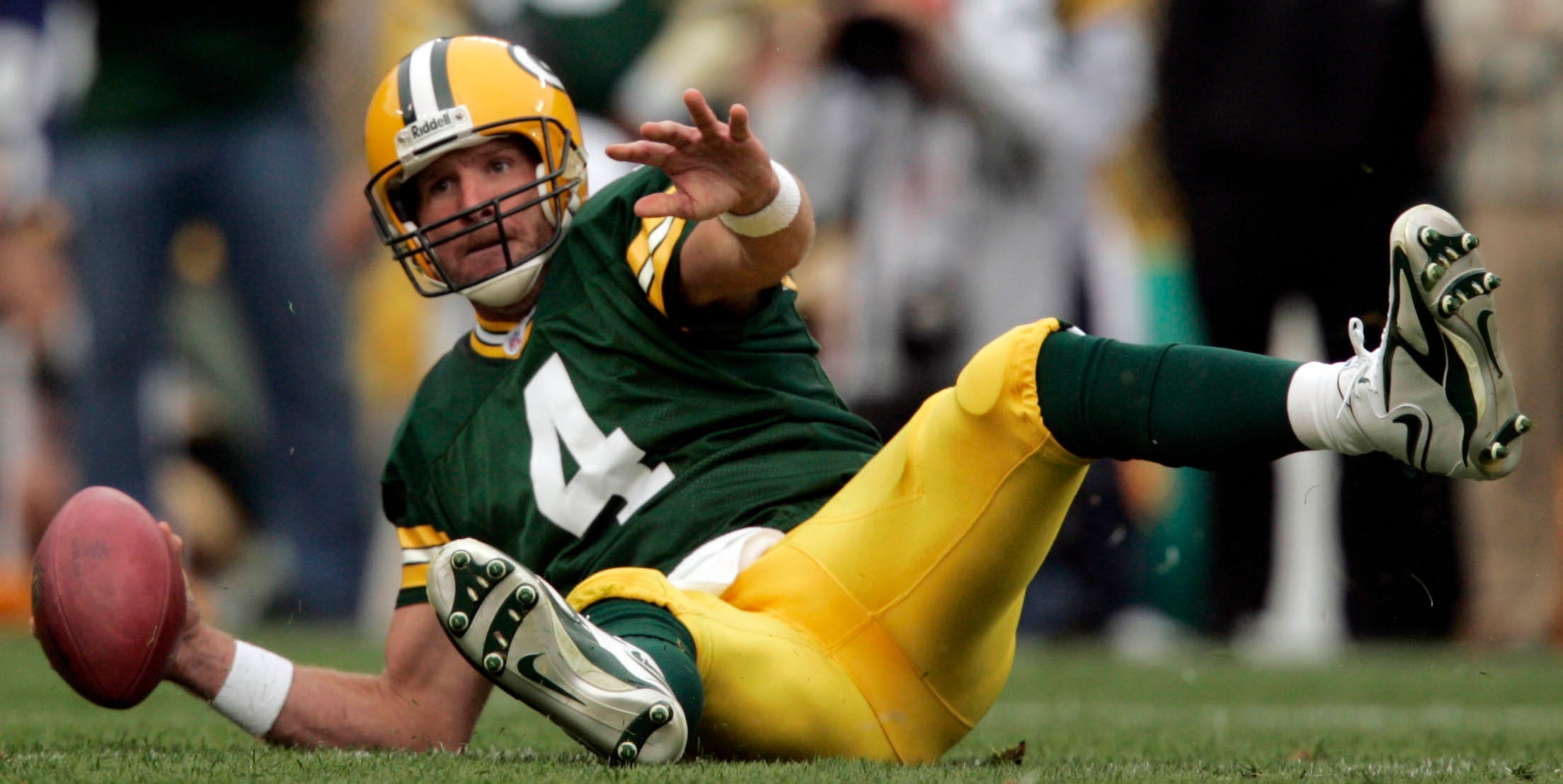
Green Bay Packers quarterback Brett Favre looks to throw the ball after tripping during the first quarter of their game against the Chicago Bears Sunday, September 10, 2006 at Lambeau Field in Green Bay, Wis. Favre did not throw the ball and took a seven yard loss on the play.
Favre’s announcement brought new attention to just how rough playing used to be. With over twenty years of experience in the pros, he began with Green Bay, then moved on to New York, before ultimately landing in Minnesota. His grit got talked about everywhere - close to three hundred straight appearances, never skipping a regular-season matchup, let alone playoff games. Folks used that run as proof of grit, something few could match.
Looking back, Favre now sees that toughness differently. He’s said he believes the repeated hits he took over the years played a role in his condition. Concussions were rarely treated seriously during much of his career. Getting struck was considered normal, and players were expected to move on quickly. Favre has estimated that he suffered hundreds of head impacts, many of which were never documented or treated correctly.
His tone today, however, is more reflective than bitter. He doesn’t talk about regret as much as he does about responsibility. The veteran has been open about how the league handled injuries in his time and how much has changed since then. His experience adds weight to ongoing conversations about player safety and the long-term effects of football.
Brett Favre still finds reasons to say thanks. He mentions appreciating his past work and loved ones, while also noting ongoing kindness from others around him. His wife, Deanna -years after fighting cancer herself - stands by him without wavering. They both take life as it comes, handling whatever shows up each morning.
Life after football didn't turn out like Favre thought it would, yet he faces it without hiding how he feels. Some fans see this part of his story as something more meaningful - something that matters just as much as stats or trophies.
Signature Section
Brett Favre is a Pro Football Hall of Fame quarterback and one of the most recognizable players in NFL history. Besides football, he still does talks here and there, helps out with charities, or shows up at events. Interest in Brett Favre's appearances and memorabilia remains strong as fans follow his journey, both on and off the field.
For more on his journey and up-to-date stats, visit the full Brett Favre athlete page.
To bring him to your next event, please visit the Brett Favre booking request page.
For brand partnerships, signings, and other opportunities, explore the Brett Favre services page.